In house at Kinishi
Electronics and cable assemblies built in house
System electronics and cable assemblies are built by Kinishi in the UK, alongside the engineering team responsible for the product.

Payload and axle weight information your operation can act on.
Kinishi develops the vehicle system and its connected reporting together. See the load in the cab, extend the information to the operation when needed, and begin with an evaluation of your own requirement.
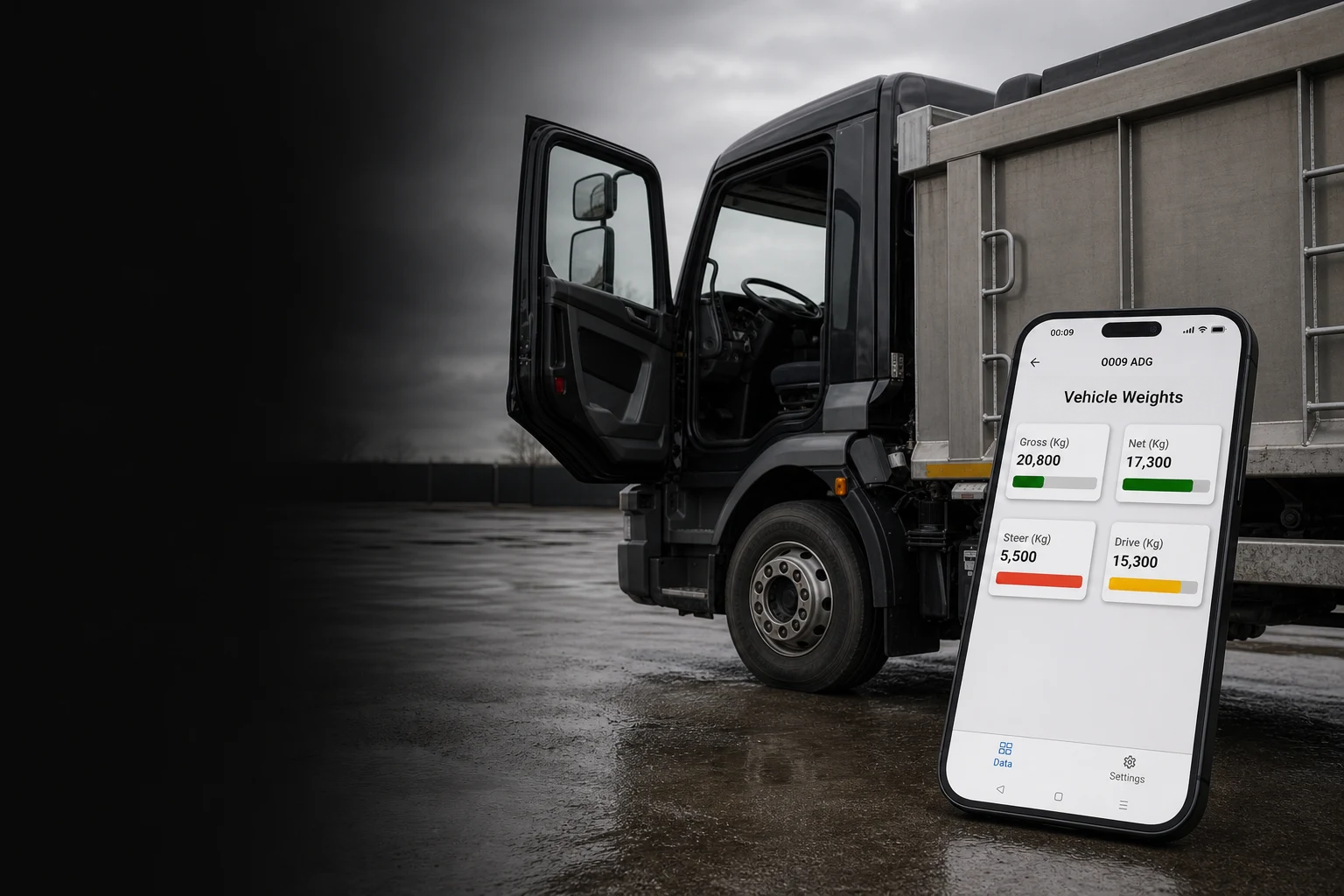
The vehicle and the operation ask different questions of the same system. One physical architecture connects sensing, modules and the core unit the driver reads — on a display or in the Onboard app; optional connected reporting carries the same information beyond the vehicle when it is needed.
The shared physical system uses a single 2-core cable running the length of the vehicle. Standard modules tap off it wherever the vehicle configuration requires.
Axle weights, gross vehicle weight and payload are presented in the cab, where drivers and loading teams can use the information during loading. Drivers read the load on the in-cab display or in the Onboard app, as each vehicle is specified.
When connected reporting is included, vehicle weight information can continue beyond the cab. The reporting requirement is defined around how the operation needs to use it.
The system is designed, manufactured and functionally tested by Kinishi in the UK. Electronics manufacture and test happen alongside the engineering team, so what production reveals reaches the people who design the system.
System electronics and cable assemblies are built by Kinishi in the UK, alongside the engineering team responsible for the product.
Every system receives a full functional end-of-line test before despatch.
Components are sourced from manufacturers or franchised distributors. Kinishi does not use grey-market parts.
Connected reporting is the optional reporting layer of the weighing system, which works on its own without it. When the operation needs the data, each vehicle's weights, trips and events go to one fleet portal, with PDF and CSV export and API access, from the same team that designs the hardware and firmware.
Explore connected reportingThe modules are standard. The configuration begins with the vehicle, suspension and application, then records the sensing context and system functions the operation needs. The exact combination is confirmed through evaluation or specification support.