
In-house SMT assembly, cable assembly and functional end-of-line test.
Engineering
Electronics design, development and manufacturing
The team that designs your system also builds, tests and integrates it.
Kinishi develops electronic systems in the UK for OEMs, product companies and specialist partners — and stays responsible beyond the design package. Every design decision is one we'll answer for in production, so it gets made with manufacture, test and integration in view.
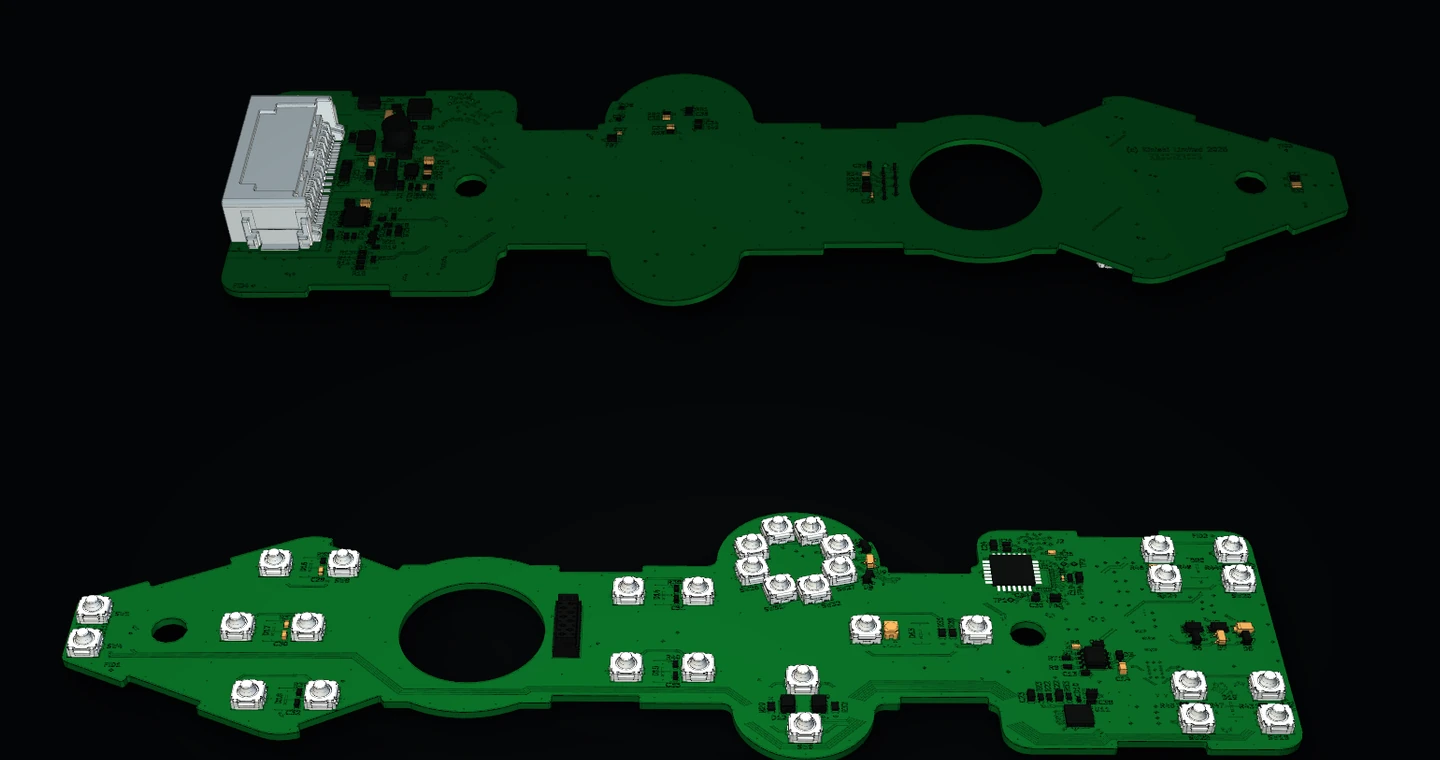
The programmes we're built for
Kinishi is built for specialist, niche-volume and demanding programmes — work that still needs production discipline, traceable engineering and a partner who carries real responsibility. If your programme crosses hardware, software, production and integration boundaries, and you want direct access to the people making the technical decisions, we should talk.
- 01
A subsystem or product that must reach production, not stop at a prototype.
- 02
Niche or specialist volumes that still demand traceability and test.
- 03
An existing design that needs productionising or improving.
- 04
A programme where hardware, firmware, software and integration interact.
Five capabilities, one connected team
Each programme draws on the mix of capabilities it needs.
Electronic hardware
Circuit, PCB and system design with production, test access and sourcing considered during design, not after it.
Firmware & embedded software
Developed alongside the hardware it runs on, evaluated against the system rather than in isolation.
Connected software
Connected reporting, APIs and data layers where the system needs them — as part of the product, not a bolt-on platform.
Manufacturing & assembly
In-house SMT and cable assembly, with a full functional end-of-line test for everything we ship. Building and testing what we design keeps production findings close to engineering decisions.
Vehicle & system integration
The system proven in the application: power, communication, installation, environment and interaction with other systems.
What production finds, engineering fixes.
Production and test observations feed directly back into engineering decisions. A test failure generates a traceable action; a manufacturing observation can change a design; integration findings reach the engineers who can act on them — because those people work together in one place, not across supplier boundaries.
- 01understand
- 02design
- 03build
- 04test
- 05integrate
- 06learn
- 07improve
Components sourced from manufacturers or franchised distributors — no grey-market parts, on any programme.
How a programme runs
- 01
Requirement
We start with the complete system — application, users, interfaces, production constraints, data, support — and challenge inherited assumptions where the facts support it.
- 02
Architecture
Hardware, firmware and software decisions are made together, with manufacturing and test in the room.
- 03
Development
Design proceeds with production intent: sourcing quality, test access, repeatability and serviceability are design inputs.
- 04
Validation
Functional testing is designed around the real product, with purpose-built fixtures where appropriate.
- 05
Production & integration
We manufacture and functionally test everything we ship, and support integration into the vehicle or host product.
Discuss an engineering programme
Outline the programme — the system, where it needs to get to, and what's constraining it. An engineering lead will respond.